
The More The Merrier
Celebrations, Ceremonies, Rituals, and Gatherings of All Kinds


Hi Zan, Hi Pa
Volume #54
December 10th, 2025
Substack #54 Ceremonies and Rituals
HI, ZAN: I’m writing this just before our Thanksgiving meal, wishing you and your sister and your loved ones were here with us. I’m thinking about holidays and other celebrations, about how we mark those days and moments. A friend of mine hates any kind of ceremony—weddings, funerals, memorials, birthdays. What are your thoughts on the subject? Any particular memories?
HI, PA: Although I’ll admit to feeling less connected to holidays and traditions since moving away from home, I personally believe that ceremonies, rituals, and celebrations are essential. The way I see it, life can be so challenging and full of suffering that such events serve as lights that illuminate our path through the darkness, like stars that form constellations in the night sky. Not all of them are happy events, of course, but even the sad ones still ground us, connect us to each other, and remind us of what’s truly important.
Yesterday, I was thinking about all the Merullo family Thanksgivings we’ve had over the years. You’ve hosted the meal at your home for as long as I can remember, and I was picturing the various groups of people who found themselves around our table over the years—classmates from boarding school, family members, coworkers, long-time friends… Sometimes the combination of people was a little odd—those individual people may never have found themselves around the same table if it weren’t for the holiday!
What are some of your most cherished memories of ceremonies or celebrations?
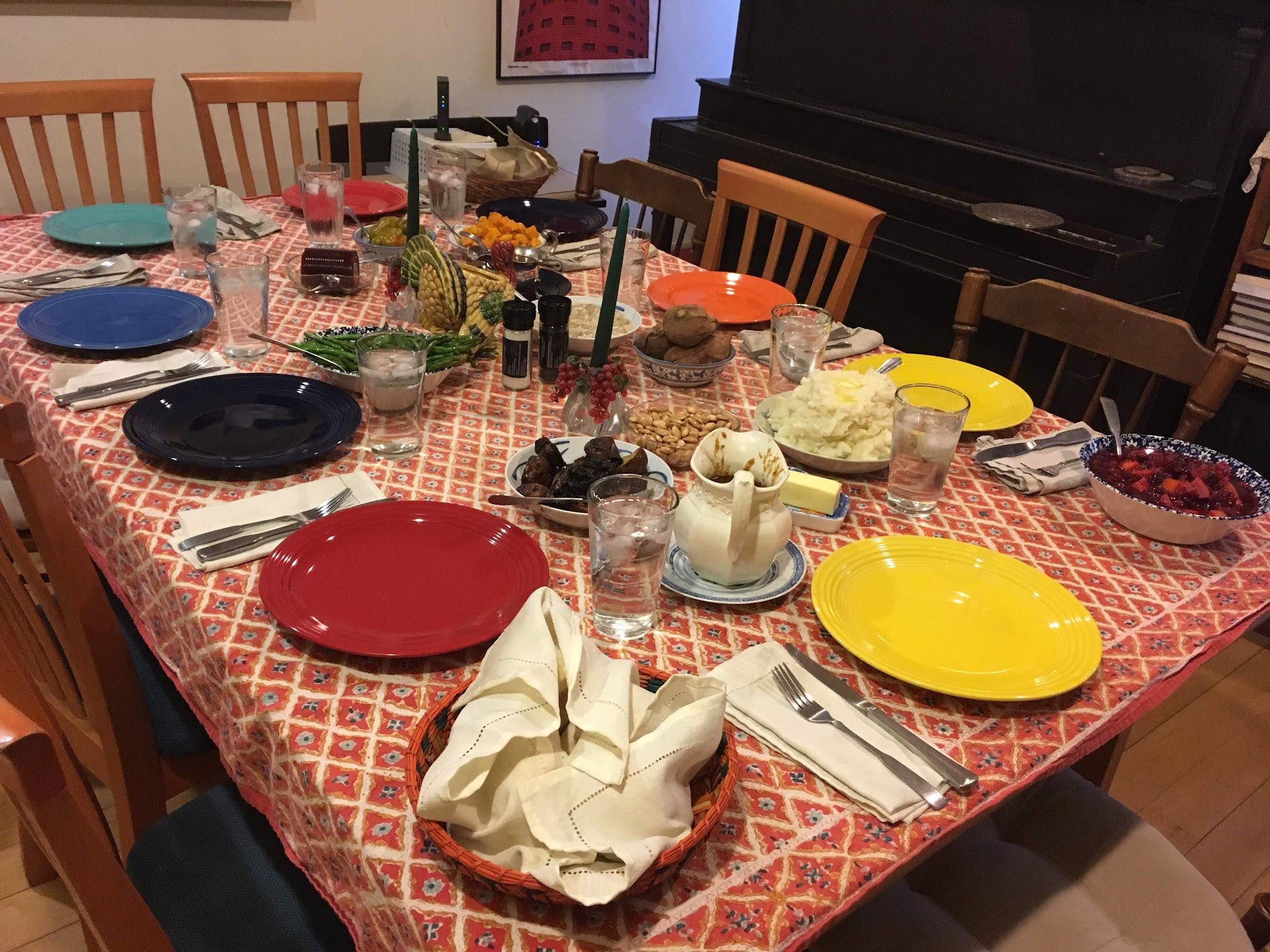
Merullo Thanksgiving table.
PA: I’m with you about the essential nature of celebrations. Every culture on Earth has done that. Maybe it’s a way of encouraging us to step away from our workaday lives for a few hours and consider the bigger picture.
As you know, I had 14 aunts and uncles and 28 first cousins on my father’s side, and 9 aunts and uncles and 12 cousins on my mother’s. Over the years, whenever a member of that large group died, there would be two or three days of wakes, a funeral Mass (we were all Catholic), a procession to the cemetery, prayers there before the burial, and then, always, a big meal afterwards. Sometimes the wakes were attended by literally thousands of people over three days, with afternoon and evening sessions. The final meals were smaller, usually just the blood relatives and a few of the closest friends, but, sad as they were, I always felt a kind of warmth in the midst of them. To varying degrees, we were all feeling the same thing, and we had all put aside our duties and pleasures to remember the life of the person who’d died, and try to comfort their immediate family members. There was something beautiful about it, a connection that transcended the everyday, transcended whatever differences we might have had—political, financial, spiritual, geographic, age, sexuality. It was a time of sorrow, yes, but also a time for communal reminiscence and appreciation of our love.
ZAN: How beautiful! I’ve only made it to a few Merullo funerals over the years, but my memory of them is that they were love-filled rather than strictly somber occasions.
Another thing I’ve been thinking about recently is how special it feels to carry on ancient traditions that have been followed for generations. Was there any sense of that at these gatherings? And, if so, what do you think that makes tradition feel so special?
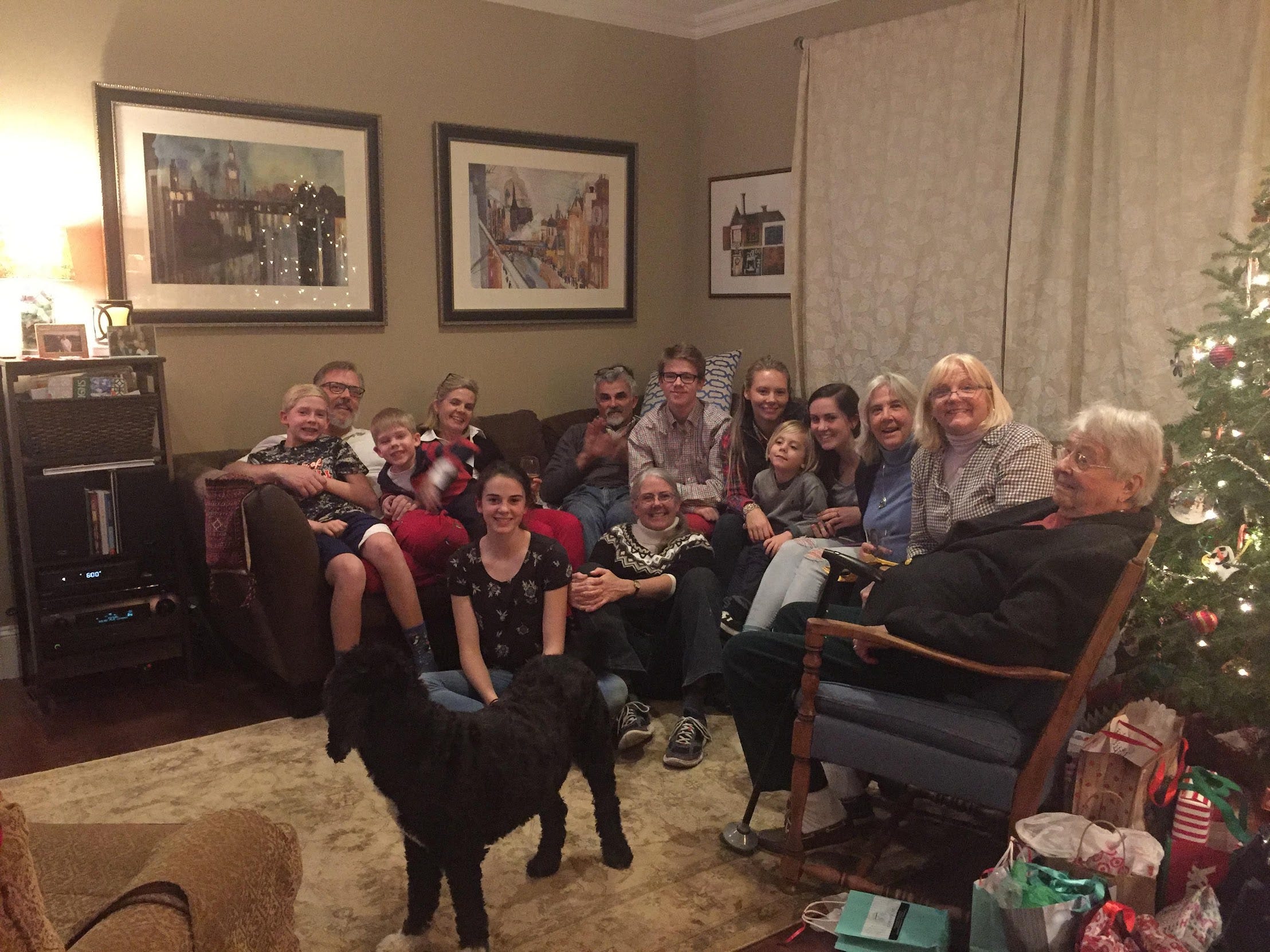
Family Christmas, 2016. My Mom’s Side of the Family.
PA: Certainly there was some sense of, “This is the way it is done,” which came from many generations of those kinds of rituals.
The reason I chose this subject was because I think we’re so used to celebrating birthdays and holidays, gathering for funerals and graduations and other special occasions, that I think we often miss what you just mentioned: these events date back very far into the human past. Christmas gift-giving is supposedly connected to the three Wise Men coming a great distance to bring gifts celebrating the birth of Christ. True, it was not considered an ordinary birth by them, but I suspect there had long been a tradition of coming to see the newborn, congratulating the parents, even bringing gifts to help them adjust to this new stage of life.
I imagine ceremonies around betrothal and marriage have ancient roots, too. Bat and Bar Mitzvahs, Confirmation, other Coming-of-Age rituals in older societies.
What is this all about? We must instinctively know that we should gather for the large events in a life, that we can’t let them go by with a just-another-day yawn.
But why do you think some people are so averse to participating?
